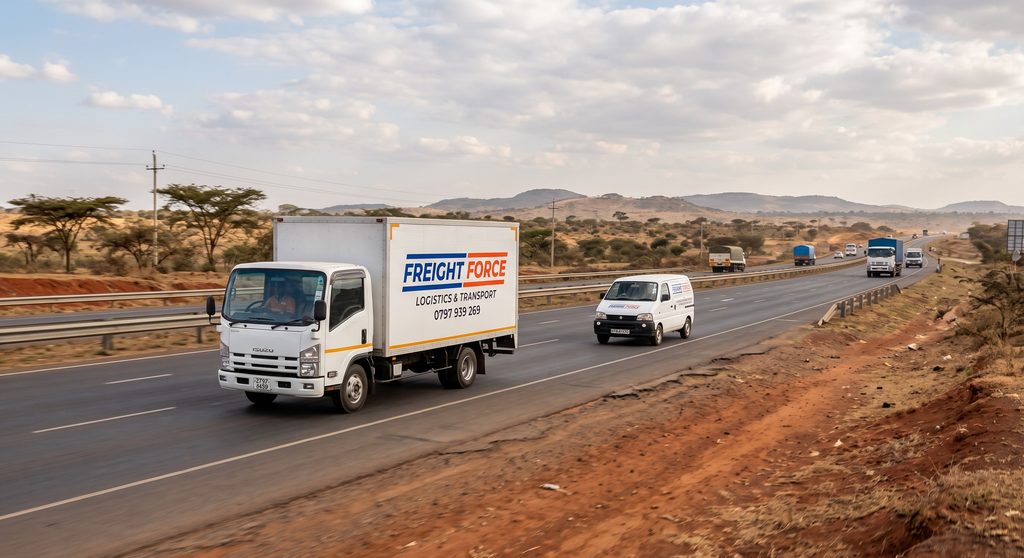
Running a commercial operation in Kenya requires moving inventory consistently between ports, warehouses, retail hubs, and regional distributors. Yet, many enterprises face the same operational friction: unvetted drivers, unoptimized Less-Than-Truckload (LTL) shipments, cargo shrinkage, and lack of real-time route visibility.
Every transit delay directly increases holding costs, strains retail relationships, and ties up working capital.
Optimizing your supply chain is not about spending more on transportation; it is about choosing the right fleet configuration, establishing structured distribution schedules, and partnering with an accountable logistics provider.
Here are the key operational bottlenecks impacting regional freight—and how you can resolve them today.
1. Inefficient Load Consolidation (Paying to Haul Empty Air)
Dispatching vehicles that are only partially loaded is one of the fastest ways to erode operating margins. Many businesses pay flat vehicle rental rates for shipments that utilize less than 60% of vehicle capacity because their provider lacks consolidation capabilities.
- The Operational Fix: Align your dispatch schedule around structured Full Truckload (FTL) and Less-Than-Truckload (LTL) planning. For smaller, regular distribution runs, partner with a carrier that offers consolidated cargo networks across high-traffic commercial corridors.
- How Freight Force Solves This: Freight Force Logistics matches cargo size directly to purpose-built fleet classes—from 3.5-tonne light delivery vans for urban retail drops to 5T–12T medium commercial trucks equipped with hydraulic tail-lifts for wholesale distribution. You pay strictly for the capacity your freight demands.
2. Fragmented Handling and Cargo Damage Risks
Every manual handover between pickup, transit, and offloading increases the risk of damaged packaging, broken goods, and stock discrepancy. When drivers and loaders lack formal safety training, cargo security degrades.
- The Operational Fix: Require strict cargo handling protocols and verified vehicle maintenance records from your transport partners. Enclosed box bodies and curtain-siders should be standard for palletized freight and sensitive merchandise.
- How Freight Force Solves This: We deploy a 100% vetted driver network trained in defensive driving, vehicle inspection, and cargo stabilization standards. With secure, monitored facilities and enclosed trucks, your goods remain protected from loading through final drop-off.
3. Blind Spots in Route Telemetry and Delivery Timelines
Operating without active dispatch updates means discovering shipment delays only after your client calls to complain. Unplanned detours, transit checkpoints, and road conditions quickly disrupt delivery schedules if dispatchers are not actively monitoring routes.
- The Operational Fix: Move away from informal transporters who communicate exclusively via uncoordinated phone calls. Switch to a provider operating a dedicated dispatch desk with continuous vehicle telemetry.
- How Freight Force Solves This: Operating across 150+ commercial routes with a 98% on-time delivery rate, our 24/7 dispatch desk tracks transit times and road conditions in real time, giving your operations team reliable delivery confirmations.
4. Bottlenecks Between Long-Haul Freight and Last-Mile Distribution
Moving cargo from primary transit corridors (such as the Mombasa–Nairobi highway) into local urban stores or retail branches often fails at the transition point. Heavy trucks cannot navigate congested city centers, while small couriers cannot handle bulk replenishment.
- The Operational Fix: Implement an integrated distribution model that pairs regional haulage with interim warehousing and dedicated urban fleet dispatches.
- How Freight Force Solves This: Freight Force integrates Warehousing & Storage with agile urban delivery. Bulk cargo is staged securely at our facilities and distributed efficiently into high-density commercial centers using dedicated light commercial vehicles.
Key Capabilities at a Glance
| Logistics Requirement | The Standard Market Challenge | The Freight Force Solution |
| Fleet Matching | One-size-fits-all trucks leading to wasted space | Tailored vehicles from 3.5T vans to 12T+ commercial haulers |
| Route Coverage | Limited inter-county reach | 150+ commercial corridors across regional routes |
| Operational Tracking | Unresponsive drivers, zero visibility | 24/7 active dispatch support with 99.4% route efficiency |
| Cargo Safety | Informal handling and cargo shrinkage | Vetted drivers, enclosed box bodies, and secure storage |
Partner with Freight Force Logistics
Whether you need regular inter-county pallet transport, container haulage coordination, or reliable store replenishment, Freight Force Logistics provides the infrastructure to keep your business moving.
Comments
No comments yet. Be the first to share your thoughts!
Share Your Thoughts